
Operations and observability
Archived Based on Bluetape4k release 1.11.0
Coroutine count alone does not explain behavior. Observe demand, pressure, service time, cancellation reason, and resource ownership at the same boundary.
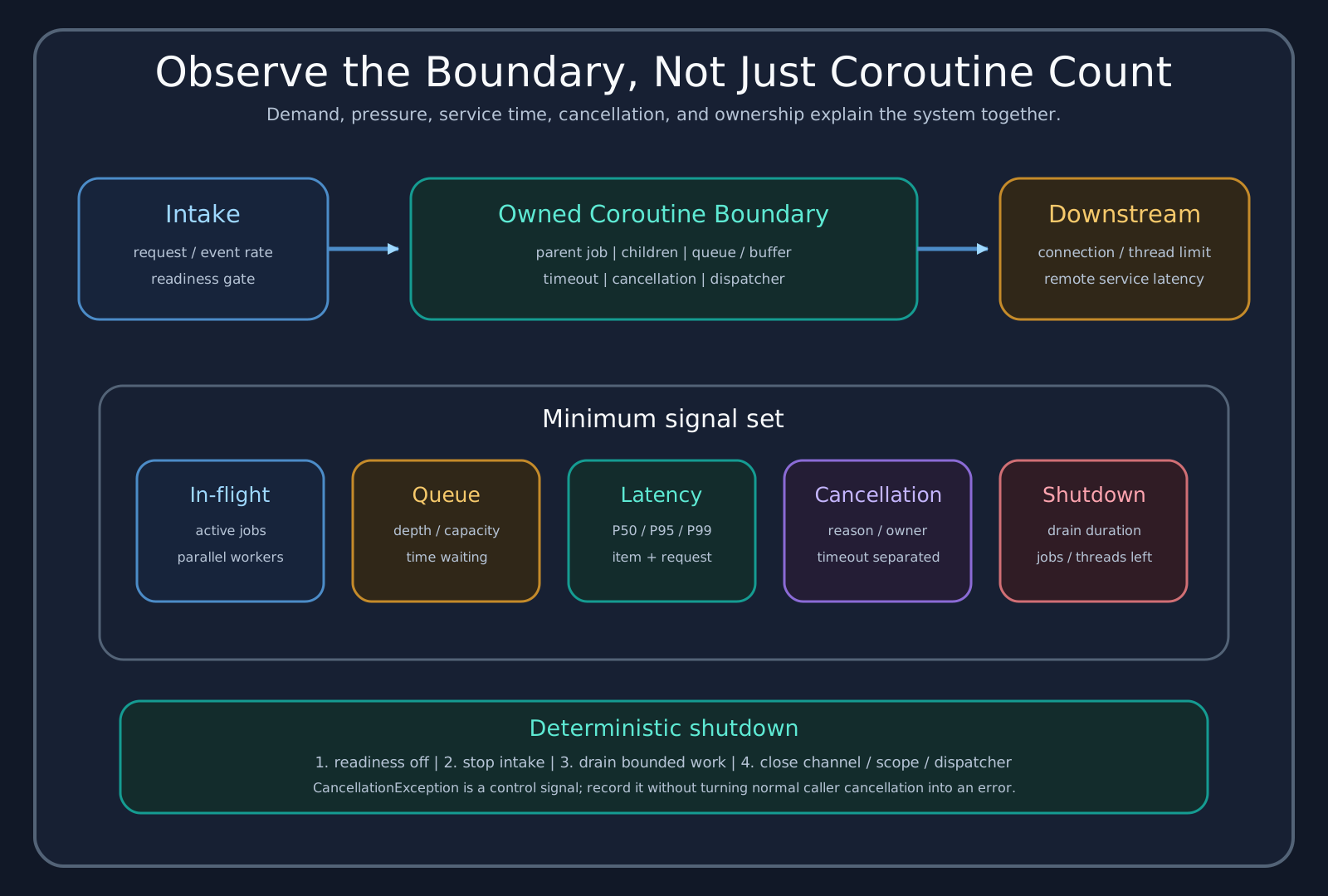
Minimum signal set
Section titled “Minimum signal set”| Signal | Question | Useful dimensions |
|---|---|---|
| in-flight jobs/workers | how much demand is active | operation, owner |
| queue/buffer depth | is production faster than downstream | component, capacity |
| latency P50/P95/P99 | where is tail latency created | operation, outcome |
| cancellation | caller, timeout, or shutdown | reason, owner |
| shutdown duration | time from intake stop to release | component, phase |
Do not put request IDs or exception messages in metric labels. Keep metrics bounded and use traces/logs for high-cardinality details.
Do not count cancellation as failure
Section titled “Do not count cancellation as failure”suspend fun <T> Timer.recordSuspend(block: suspend () -> T): T { val sample = Timer.start(registry) try { return block() } catch (e: CancellationException) { cancellationCounter.increment() throw e } catch (e: Exception) { failureCounter.increment() throw e } finally { sample.stop(this) }}Separate caller cancellation from timeout to distinguish abandonment from service latency. Do not turn normal cancellation into an error span, but record its reason and owner.
Readiness versus liveness
Section titled “Readiness versus liveness”- Readiness asks whether new work can be accepted safely.
- Liveness asks whether the process can recover.
A saturated connection pool or permanently full queue may require throttling intake or dropping readiness. CPU utilization alone is insufficient.
Deterministic shutdown
Section titled “Deterministic shutdown”- turn readiness off;
- stop listeners, consumers, and other intake;
- drain bounded work within an explicit timeout;
- terminally close channels/subjects, owned scopes, and dispatchers;
- record remaining jobs, threads, and resources.
override fun close() = runBlocking { accepting.set(false) withTimeoutOrNull(shutdownTimeout) { pendingJobs.joinAll() } subject.complete() workerScope.close()}Review which thread calls runBlocking and the framework shutdown deadline. Never wait for a dispatcher from work running on that same constrained dispatcher.
Troubleshooting order
Section titled “Troubleshooting order”| Symptom | First signal | Next check |
|---|---|---|
| rising latency | queue wait and downstream latency | parallelism/capacity mismatch |
| rising timeout | in-flight and retry count | retry-times-race amplification |
| slow shutdown | remaining jobs and dispatcher threads | owner/close path |
| first event missing | collector count and registration time | Subject startup contract |
| cancellation pollutes errors | exception classification | rethrow CancellationException |
Source and verification anchors
Section titled “Source and verification anchors”- lifecycle:
CloseableCoroutineScope.kt - Flow pressure:
AsyncFlow.kt - Subject cancellation:
SubjectCancellationTest.kt
Finally, assemble the contracts into runnable scenarios in Recipes and workshops.