
Marker selection
Archived Based on Bluetape4k release 1.11.0
Choosing by name alone tends to overload Experimental and Internal. Start with the unstable contract: can callers rely on the API, is the declaration public only for technical reasons, does safe use require specialized knowledge, or is only third-party implementation unstable?
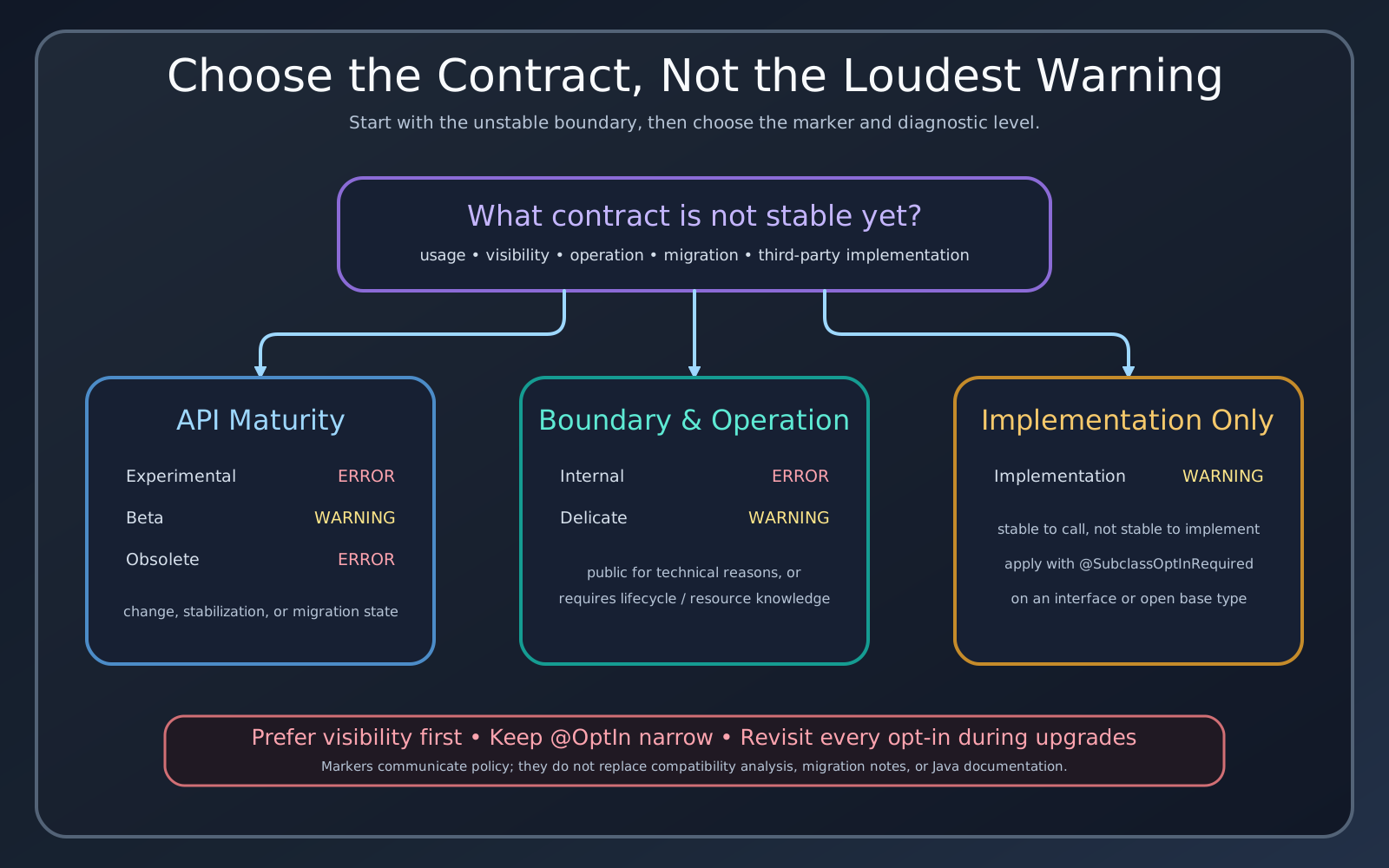
Check visibility first
Section titled “Check visibility first”Prefer internal or private when external code has no reason to access a declaration. A marker adds policy to a public declaration; it does not replace visibility. Consider a marker when inlining, framework integration, or another technical constraint requires public exposure.
Contracts of the six markers
Section titled “Contracts of the six markers”| Marker | Diagnostic | Use when | Caller accepts |
|---|---|---|---|
BluetapeExperimentalApi | Error | The contract may change or disappear | No source or binary compatibility guarantee |
BluetapeBetaApi | Warning | Stabilization is likely, with minor changes still possible | Minor source, binary, or behavior changes |
BluetapeInternalApi | Error | The declaration is public only for technical reasons | It is not supported external API |
BluetapeDelicateApi | Warning | Safe use requires lifecycle, concurrency, resource, or security knowledge | The documented contract and failure modes |
BluetapeObsoleteApi | Error | The API remains only for migration or compatibility | No new use and possible removal |
BluetapeImplementationApi | Warning | Calling is stable but third-party implementation is not | Changes to the implementation or subclassing contract |
Experimental, Internal, and Obsolete block compilation without opt-in. Beta and Delicate emit warnings. Implementation applies when code implements or subclasses a type marked through @SubclassOptInRequired, not when it merely calls the type.
Common boundaries
Section titled “Common boundaries”Experimental versus Beta
Section titled “Experimental versus Beta”Use Experimental while removal or incompatible changes remain plausible. Use Beta after the direction is settled and only minor changes are expected. Do not choose Beta merely because a warning is more convenient than an error.
Internal versus Delicate
Section titled “Internal versus Delicate”Internal says external use is unsupported. Delicate says external use is permitted after the caller understands a demanding contract. The current Kafka binary codecs use BluetapeDelicateApi to flag serialization and type-safety boundaries.
Obsolete versus Deprecated
Section titled “Obsolete versus Deprecated”Obsolete is an opt-in policy. Kotlin @Deprecated supplies a replacement and migration message to IDEs. They solve different problems and may be combined when an API needs both a hard usage boundary and a migration path.
Combining markers
Section titled “Combining markers”One marker usually communicates the owning contract best. Multiple markers can obscure what the caller is accepting. Combine them only when independent contracts genuinely overlap, and explain each contract separately in KDoc.