
Concurrency and lifecycle
Archived Based on Bluetape4k release 1.11.0
Problem
Section titled “Problem”Limiting only concurrent calls to an asynchronous dependency still allows an unbounded waiting queue when producers are faster. Shutdown must reject new work, distinguish queued work from already-running external work, and close dependent resources in reverse order.
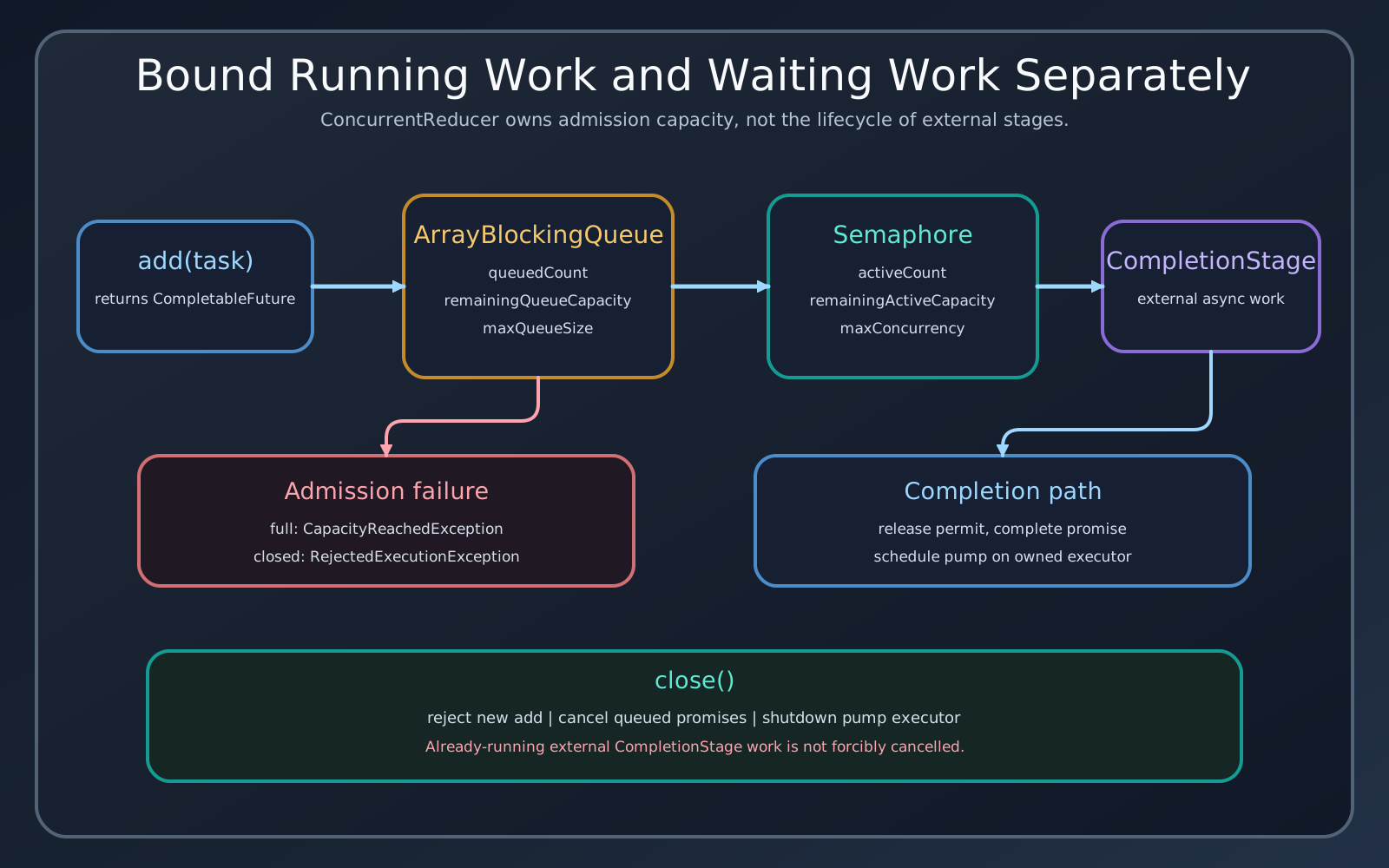
ConcurrentReducer bounds both active capacity and queue capacity. ShutdownQueue is a final JVM-exit safety net that closes process-wide resources in reverse registration order.
ConcurrentReducer state model
Section titled “ConcurrentReducer state model”| State/signal | Meaning |
|---|---|
activeCount | Tasks currently holding permits |
queuedCount | Accepted tasks not yet started |
remainingActiveCapacity | Permits available to start immediately |
remainingQueueCapacity | Additional tasks that may wait |
| closed | New submissions rejected and queued promises cancelled |
Both maxConcurrency and maxQueueSize must be positive. The implementation combines an ArrayBlockingQueue, a Semaphore, and a single-thread pump executor that advances work after completions.
Complete usage example
Section titled “Complete usage example”import io.bluetape4k.concurrent.concurrentReducerOfimport java.util.concurrent.CompletionStage
fun <T> fetchAll( ids: List<String>, fetchAsync: (String) -> CompletionStage<T>,): List<T> = concurrentReducerOf<T>( maxConcurrency = 8, maxQueueSize = 64,).use { reducer -> val promises = ids.map { id -> reducer.add { fetchAsync(id) } } promises.map { it.join() }}Observe every promise returned by add. A full queue or closed reducer does not synchronously throw at the call site; it returns an already-failed CompletableFuture.
Submission and completion contract
Section titled “Submission and completion contract”| Situation | Returned promise |
|---|---|
| Accepted into queue | Completes with task result/error |
| Queue full | Fails with CapacityReachedException |
| Reducer closed | Fails with RejectedExecutionException |
| Task lambda throws | Fails with the same error and releases permit |
Task returns a null stage | Fails with NullPointerException |
| Caller cancels queued promise | Skipped before start and permit released |
join() can wrap the cause in CompletionException. Apply separate policy for overload rejection, task failure, and caller cancellation by inspecting the cause.
What close guarantees
Section titled “What close guarantees”close() is idempotent. The first call marks the reducer closed, cancels queued promises with cancel(false), and shuts down its pump executor. It cannot forcibly cancel an external CompletionStage that has already started because the reducer does not own that stage.
Design shutdown in this order:
- Stop producers from creating new work.
- Drain running work as required, or use the external client’s cancellation API.
- Close the reducer to cancel queued work.
- Close the client/executor invoked by the reducer.
ShutdownQueue’s role
Section titled “ShutdownQueue’s role”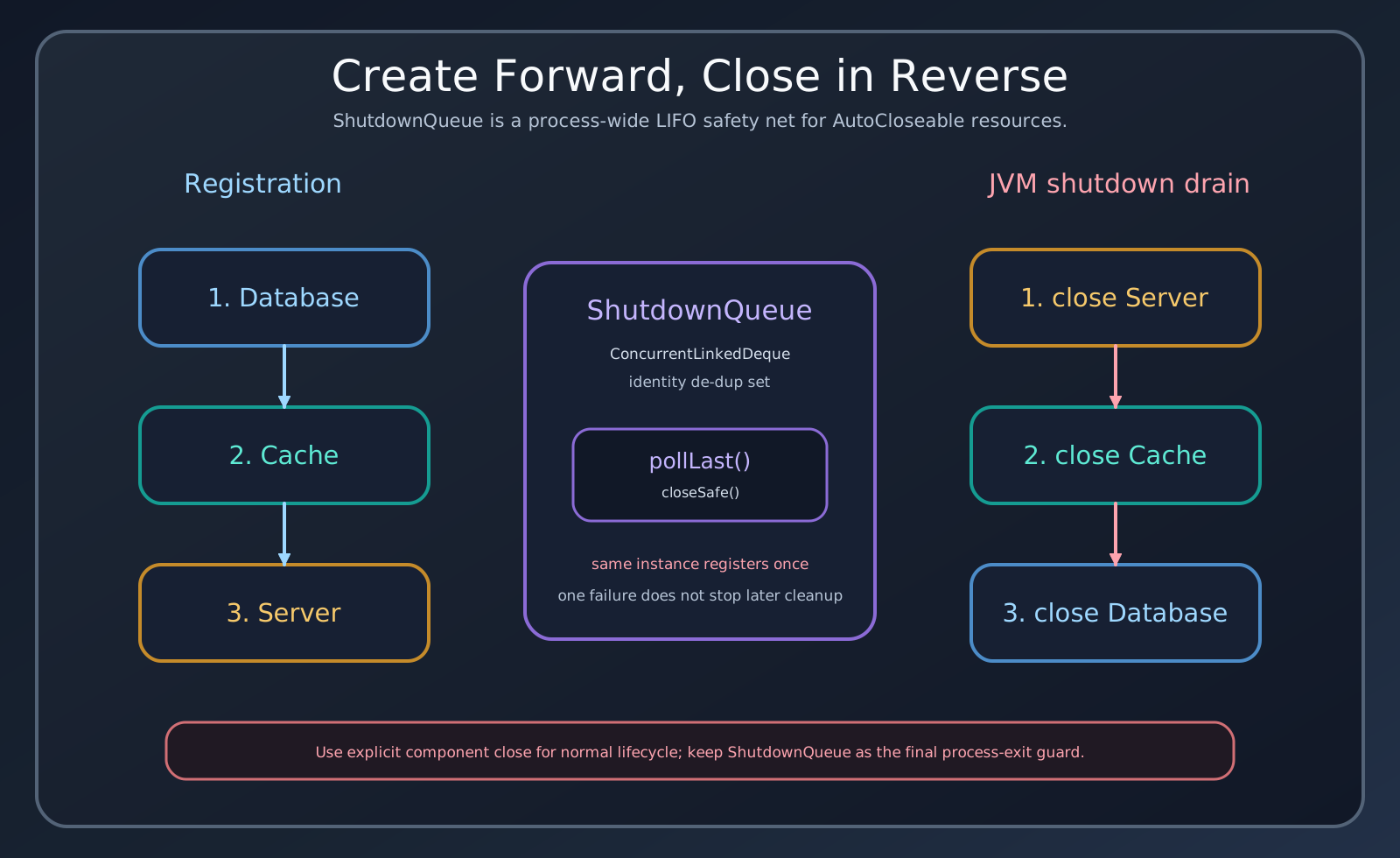
ShutdownQueue.register(closeable) ignores duplicate registration of the same object. Its JVM shutdown hook uses pollLast() for LIFO closing. closeSafe prevents one close failure from blocking remaining cleanup.
val client = ExternalClient()val service = Service(client)
ShutdownQueue.register(client)   // dependency firstShutdownQueue.register(service)  // dependent wrapper later; closes first
Do not replace normal lifecycle ownership with this queue. Close directly in a Spring bean, request, or test-fixture lifecycle when an earlier deterministic boundary exists. Use ShutdownQueue only to protect against process-exit omissions.
Choosing the mechanism
Section titled “Choosing the mechanism”| Requirement | Choice |
|---|---|
Bound active and waiting CompletionStage work | ConcurrentReducer |
| Bound only suspend-function concurrency | Coroutine semaphore or mapParallel |
| Durable delivery and retry | Broker or durable queue |
| Normal shutdown of component-owned resource | Direct close in component lifecycle |
| JVM-exit safety net for process-wide resource | ShutdownQueue |
Operations and troubleshooting
Section titled “Operations and troubleshooting”- Track
activeCount,queuedCount, queue-full rejection, and task failure separately. - Queue capacity is a hidden latency budget. Estimate worst wait from
maxQueueSize / throughput. - Record producer-stop, queued-cancellation, running-drain, and dependency-close times separately during shutdown.
- Unbounded retry on a full queue amplifies overload. Define a retry budget, backoff, and caller-visible 429/503 policy.
Source and representative tests
Section titled “Source and representative tests”Continue with Bounded collections for process-local state and Core recipes for the assembled flow.