
Practical Core recipes
Archived Based on Bluetape4k release 1.11.0
Purpose
Section titled “Purpose”Core is a utility catalog, but real design follows boundary flow rather than a function list.
caller input -> validate once -> choose representation -> mutate bounded local state -> submit through bounded async capacity -> observe result or rejection -> stop producers and close in dependency orderThis chapter assembles earlier contracts into a small component. Not every helper is mandatory. Keep the Kotlin/JDK solution when it already expresses the contract clearly.
Recipe 1: Validate once at the boundary
Section titled “Recipe 1: Validate once at the boundary”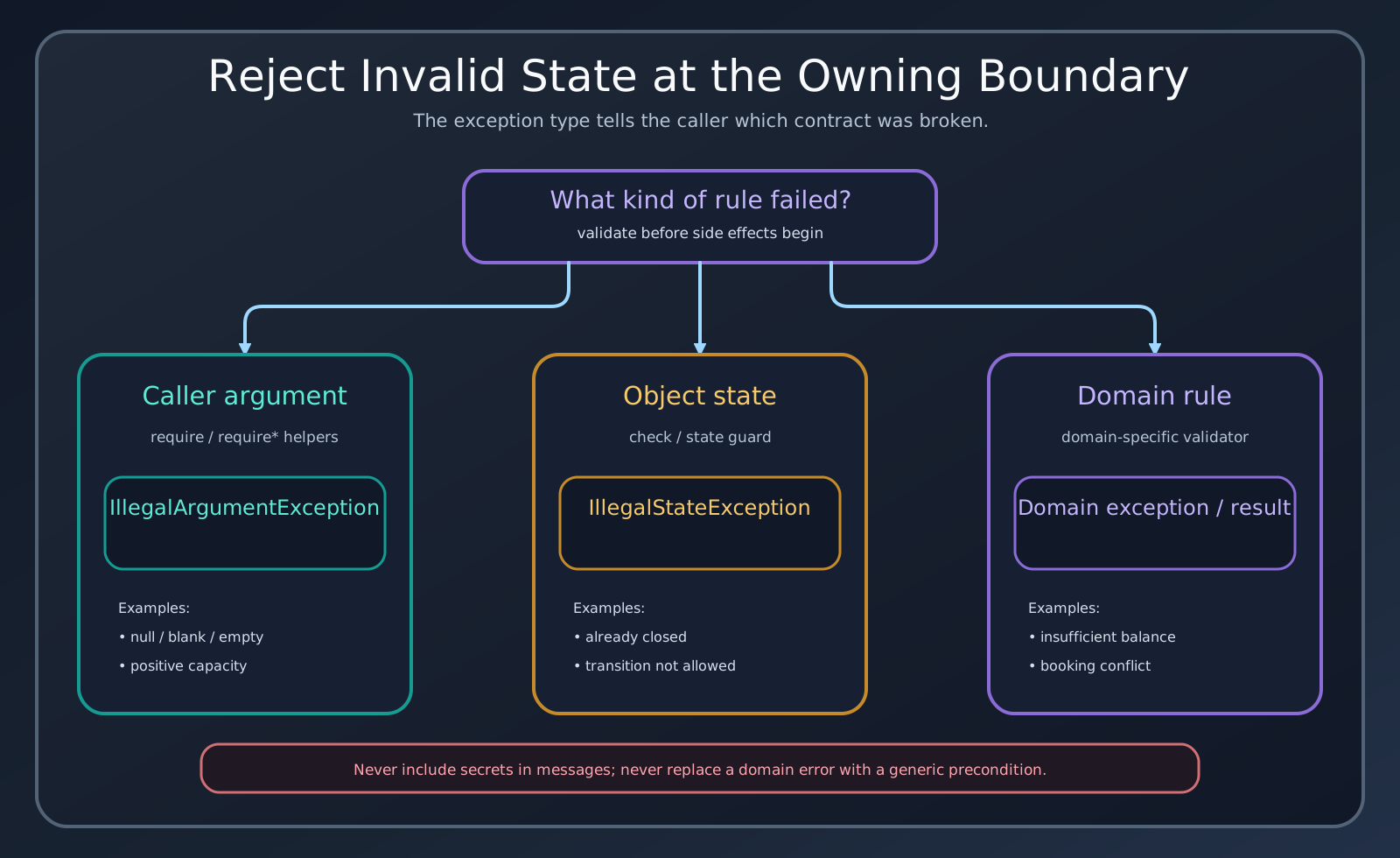
import io.bluetape4k.support.requireInRangeimport io.bluetape4k.support.requireNotBlank
data class EventCommand(    val tenantId: String,    val payload: String,    val priority: Int,)
fun eventCommand(tenantId: String?, payload: String?, priority: Int) =    EventCommand(        tenantId = tenantId.requireNotBlank("tenantId"),        payload = payload.requireNotBlank("payload"),        priority = priority.requireInRange(0, 9, "priority"),    )
Validate before side effects. Passing a validated, non-null value object across the internal boundary avoids repeated defense against caller errors.
Recipe 2: Choose representation and bounded history
Section titled “Recipe 2: Choose representation and bounded history”import io.bluetape4k.codec.encodeBase64Stringimport io.bluetape4k.collections.RingBuffer
data class AcceptedEvent(val tenantId: String, val encodedPayload: String)
class RecentEvents(capacity: Int) { private val events = RingBuffer<AcceptedEvent>(capacity)
fun accept(command: EventCommand): AcceptedEvent = AcceptedEvent(command.tenantId, command.payload.encodeBase64String()) .also(events::add)
fun snapshot(): List<AcceptedEvent> = events.toList() // oldest -> newest}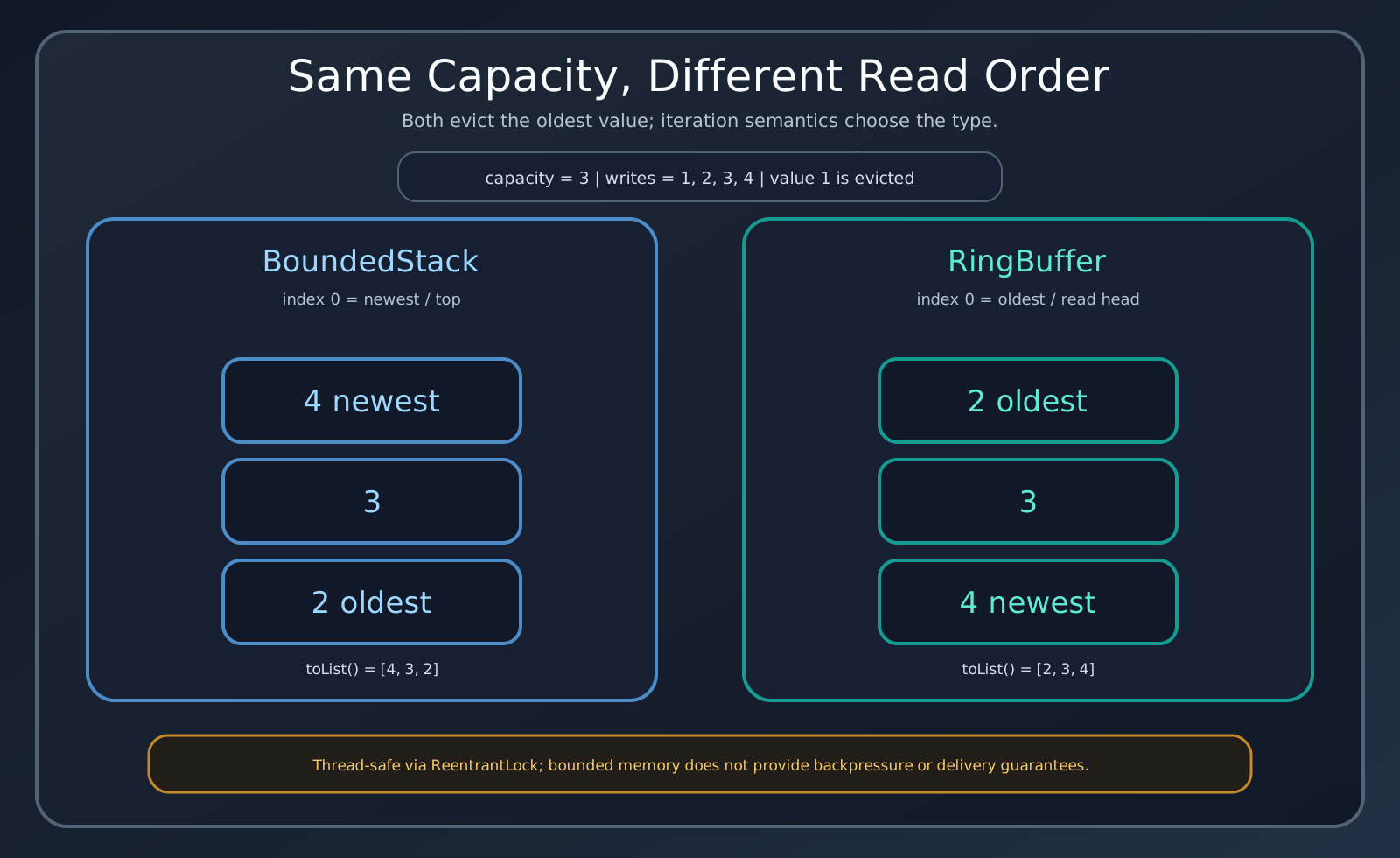
RingBuffer fits recent history read oldest-first. Use BoundedStack for undo state that pops newest-first. Both evict the oldest value beyond capacity, so use them only where eviction is acceptable—not for audit logs or delivery queues.
Base64 is a transport representation, not security. If the payload is secret, snapshots and logs keep the same access policy as the source.
Recipe 3: Put two capacities in front of external work
Section titled “Recipe 3: Put two capacities in front of external work”import io.bluetape4k.concurrent.ConcurrentReducerimport io.bluetape4k.concurrent.concurrentReducerOfimport java.util.concurrent.CompletableFutureimport java.util.concurrent.CompletionStage
interface EventSink : AutoCloseable { fun send(event: AcceptedEvent): CompletionStage<String>}
class EventDispatcher(private val sink: EventSink) : AutoCloseable { private val reducer: ConcurrentReducer<String> = concurrentReducerOf(maxConcurrency = 8, maxQueueSize = 64)
fun dispatch(event: AcceptedEvent): CompletableFuture<String> = reducer.add { sink.send(event) }
val active: Int get() = reducer.activeCount val queued: Int get() = reducer.queuedCount
override fun close() = reducer.close()}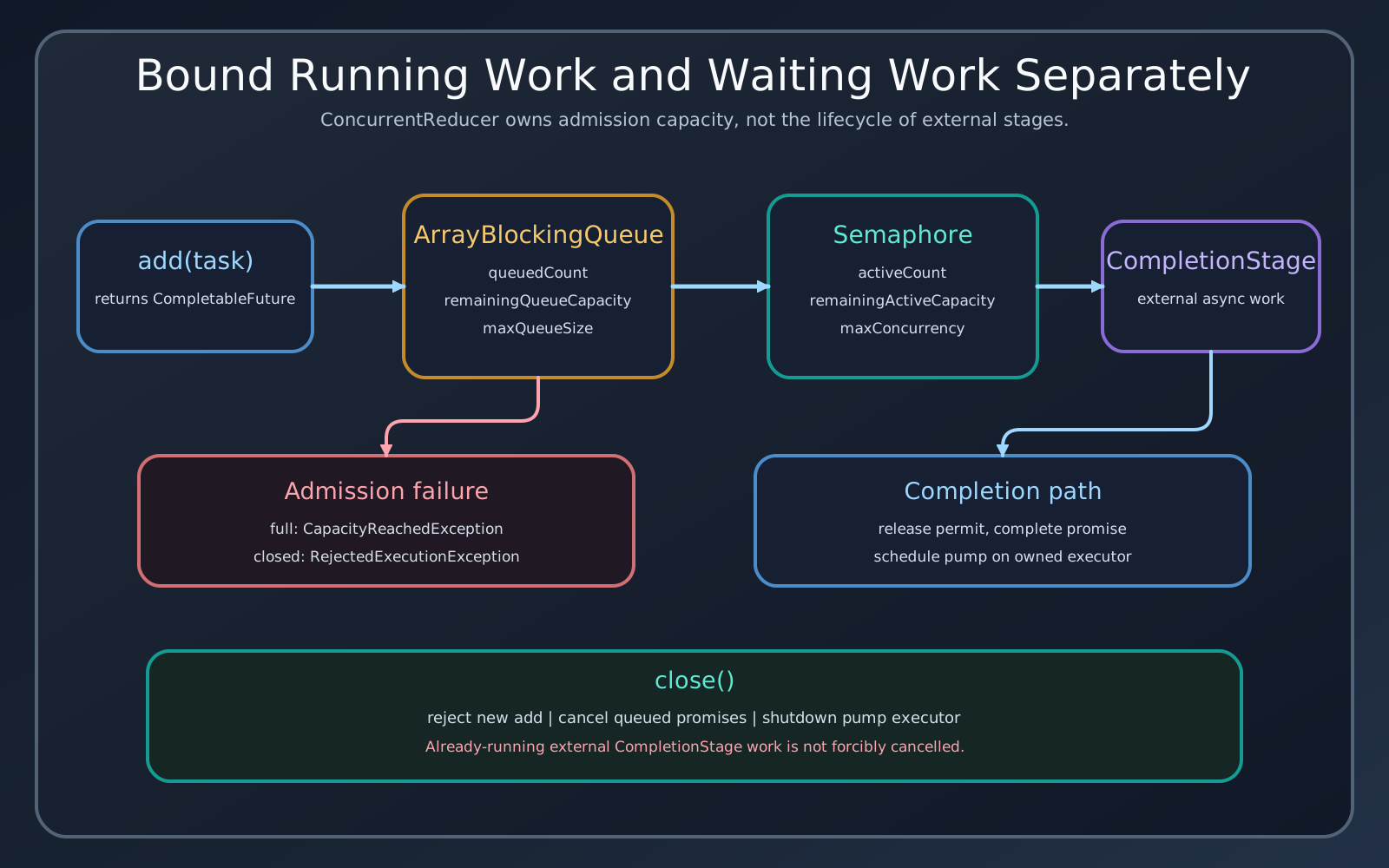
The caller must observe every dispatch future. Queue-full completes with CapacityReachedException; submission after close completes with RejectedExecutionException. Map these separately from task failure to retry or HTTP overload policy.
Recipe 4: Separate normal shutdown from the JVM safety net
Section titled “Recipe 4: Separate normal shutdown from the JVM safety net”import io.bluetape4k.utils.ShutdownQueue
class EventRuntime( private val sink: EventSink, private val dispatcher: EventDispatcher,) : AutoCloseable { override fun close() { dispatcher.close() // producers stopped before this call sink.close() }}
val sink: EventSink = createEventSink()val dispatcher = EventDispatcher(sink)val runtime = EventRuntime(sink, dispatcher)
ShutdownQueue.register(sink)ShutdownQueue.register(dispatcher)ShutdownQueue.register(runtime)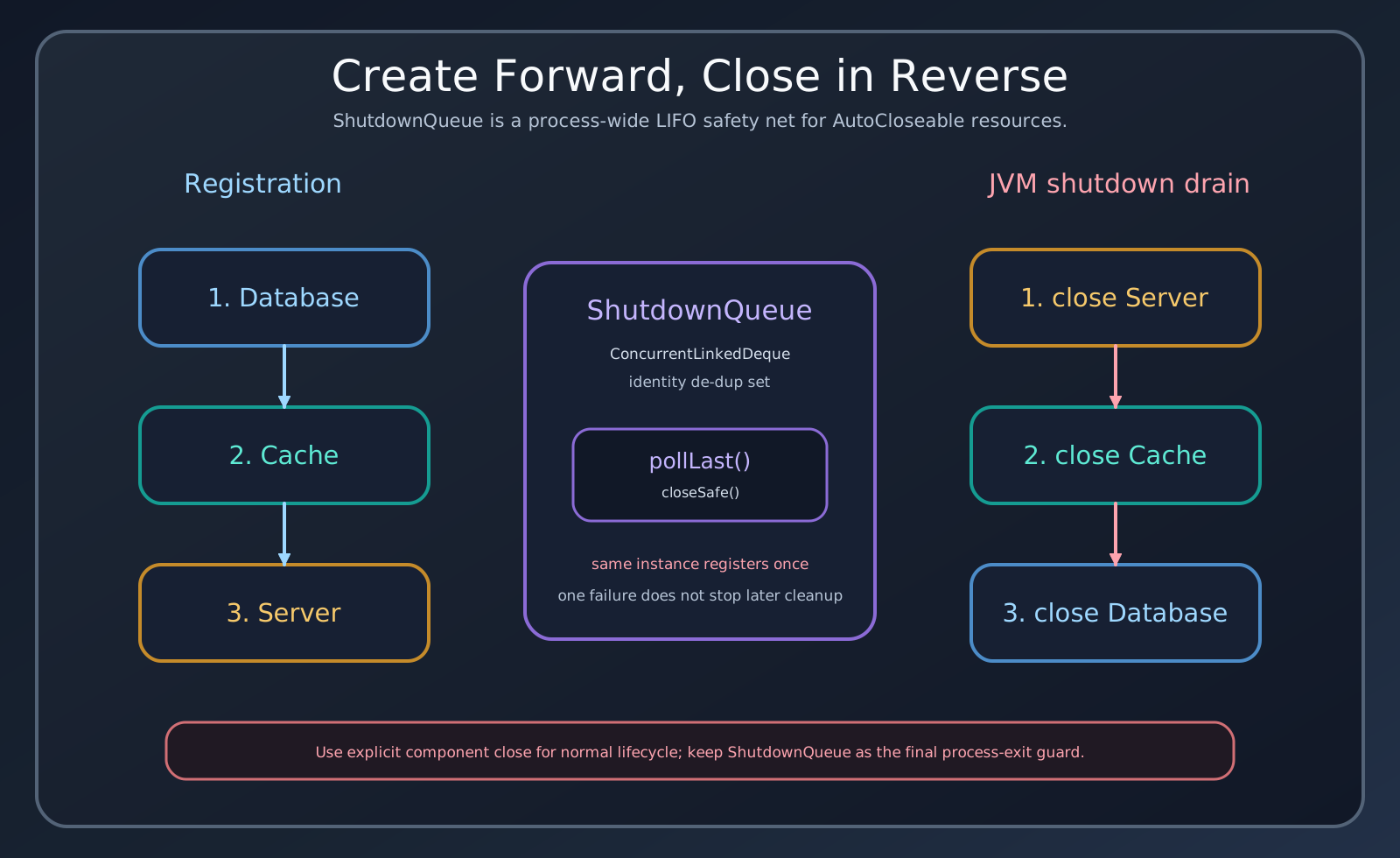
Call runtime.close() from the normal application lifecycle. ShutdownQueue registration is a backup attempt at reverse-order cleanup during process exit. Duplicate registration of the same object is ignored, but registering wrappers and their inner resources can still close each distinct object; make close implementations idempotent.
End-to-end verification scenarios
Section titled “End-to-end verification scenarios”| Scenario | Assertion to lock |
|---|---|
| Null/blank tenant | IllegalArgumentException before side effect |
| Payload round-trip | Decoded UTF-8 equals source text |
| History capacity + 1 | Oldest eviction, oldest-to-newest snapshot |
| Reducer queue full | Returned future cause is CapacityReachedException |
| Task error | Permit released and next queued task advances |
| Reducer close | Queued promise cancelled and new submission rejected |
| Shutdown | Dispatcher then sink after producer stop |
Operations checklist
Section titled “Operations checklist”- Was capacity derived from memory limits and allowed wait time?
- Are eviction and rejection separate metrics?
- Is every returned future observed?
- Does normal lifecycle close resources before
ShutdownQueueis needed? - Are encoded secrets kept out of ordinary logs?
- Do downstream time/range queries have endpoint tests?
Source and further reading
Section titled “Source and further reading”- Validation and invariants
- Encoding and data boundaries
- Bounded collections
- Time and ranges
- Concurrency and lifecycle
bluetape4k-coretests
Even without a dedicated workshop, the representative tests are runnable specifications. Add a small consumer integration test for only the helpers you compose, and keep this manual as the contract source of truth.