
Validation and invariants
Archived Based on Bluetape4k release 1.11.0
Validation is the boundary that prevents invalid state from entering the system. Exception meaning follows the owner of the failed rule.
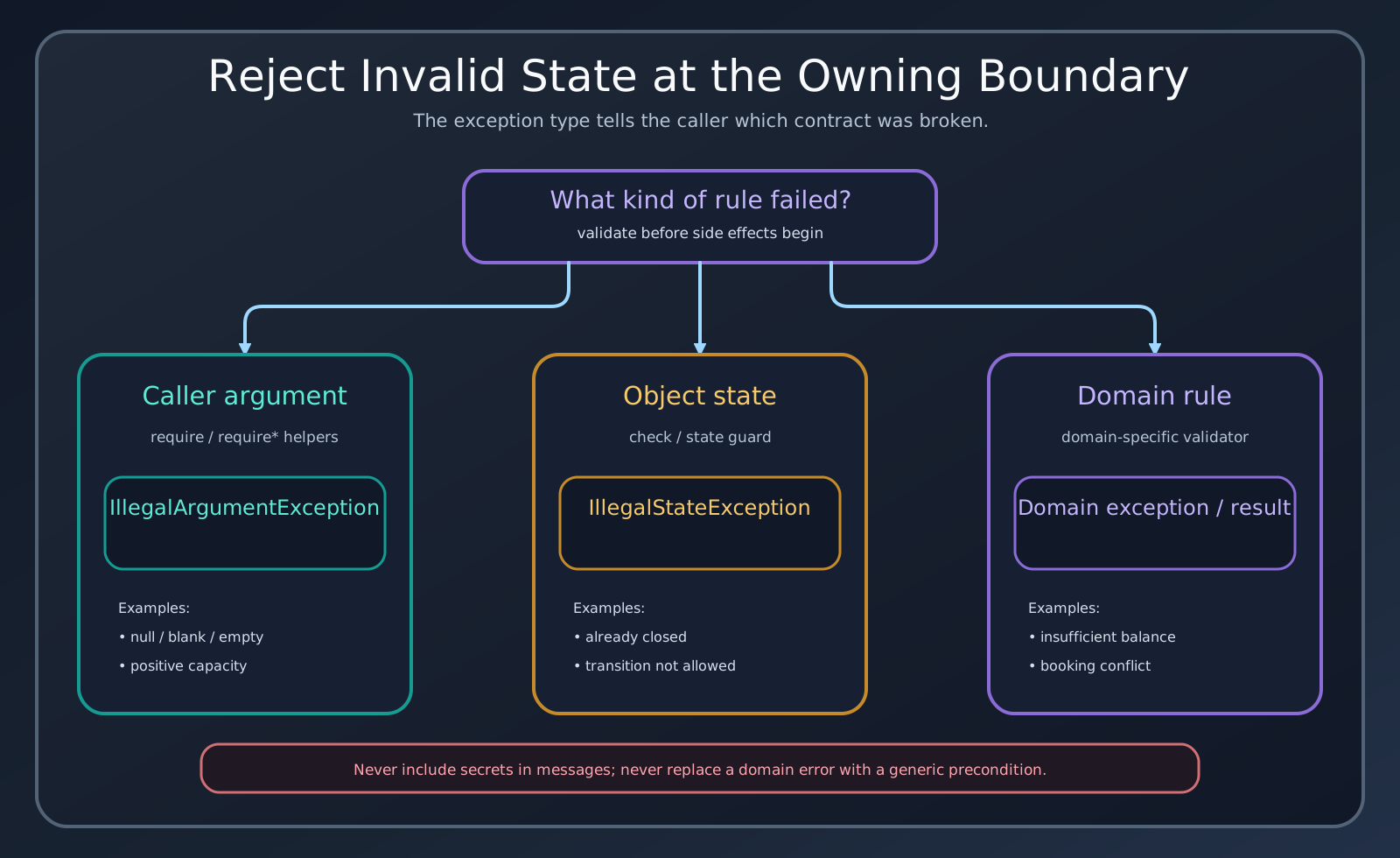
The three boundaries
Section titled “The three boundaries”| Failed rule | Default tool | Surface |
|---|---|---|
| caller argument | require, requireNotBlank, requirePositiveNumber, etc. | IllegalArgumentException |
| state of an existing object | check or explicit state guard | IllegalStateException |
| business/domain rule | domain validator/result/exception | domain-specific surface |
Replacing domain failure with a generic precondition prevents callers from distinguishing retry, user feedback, and state transitions.
Helpers preserve the receiver
Section titled “Helpers preserve the receiver”Most require* extensions return the validated receiver.
class SearchRequest(rawQuery: String?, limit: Int) { val query: String = rawQuery.requireNotBlank("query").trim() val limit: Int = limit.requireInRange(1, 100, "limit")}The helper set covers null/empty/blank, text containment, equality/comparison, closed/open ranges, numeric signs, and array/collection/map conditions. Keep plain require when it is clearer.
Validate before side effects
Section titled “Validate before side effects”fun createAccount(command: CreateAccount): AccountId { val email = command.email.requireNotBlank("email") command.initialCredit.requireZeroOrPositiveNumber("initialCredit") return repository.insert(email, command.initialCredit)}Racy invariants still require transactions or uniqueness constraints; preconditions alone cannot make them atomic.
Messages and observability
Section titled “Messages and observability”- include parameter name and expected condition;
- never include passwords, tokens, or raw sensitive payloads;
- count caller argument failures separately from server-state violations;
- keep high-cardinality raw values out of metric labels.
Testing
Section titled “Testing”Cover values immediately below and above boundaries, null, empty, blank, open/closed endpoints, and returned receiver identity. Assert exception type and parameter name when they are public contract.
Source and representative tests
Section titled “Source and representative tests”Next, keep validated data inside a fixed memory budget with Bounded collections.