
Runtime Boundaries
Archived Based on Image release 0.3.0
Image processing crosses heap, file, network, and native-memory boundaries. A successful API call does not prove that these resources are owned correctly.
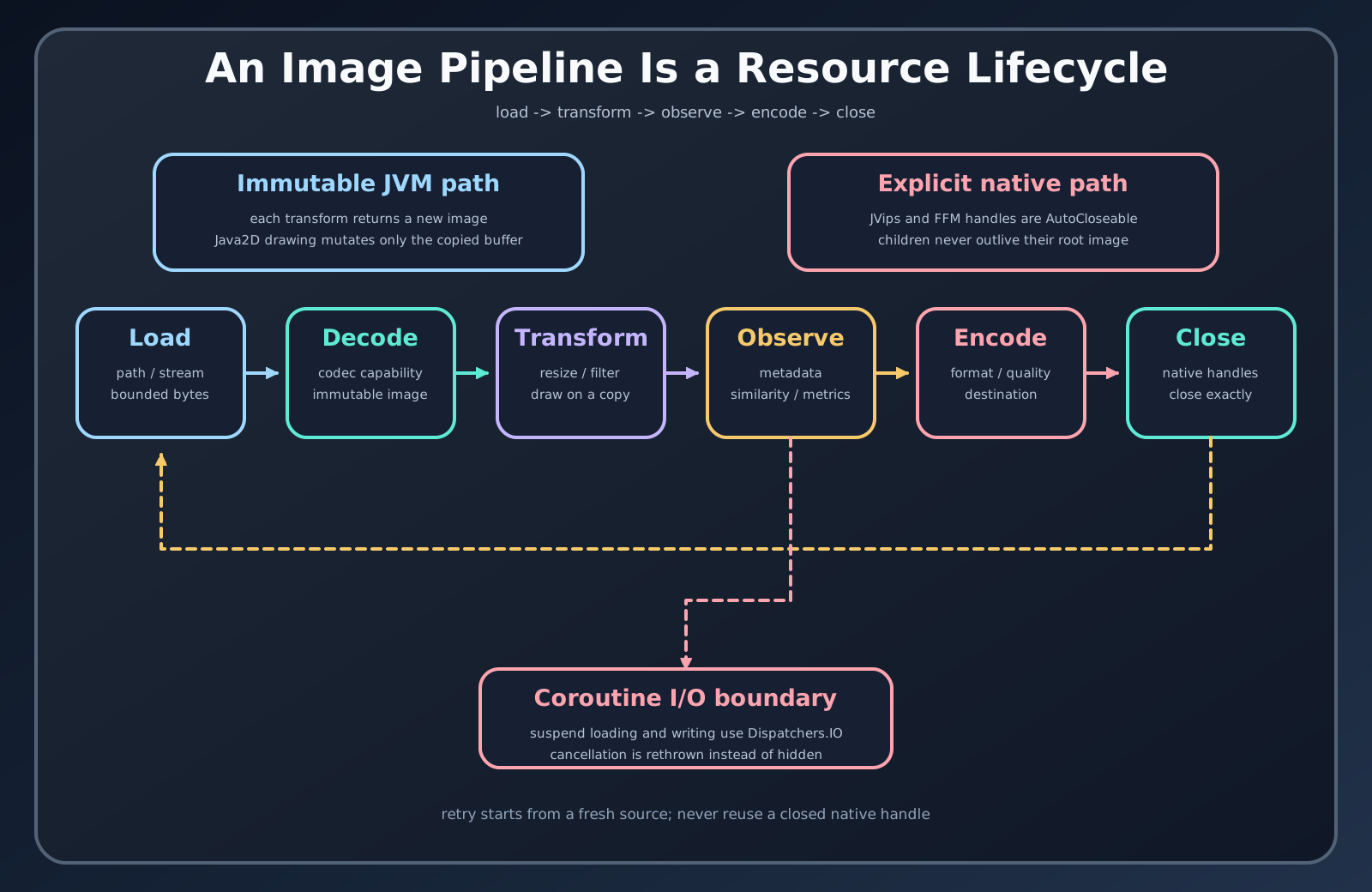
JVM image boundary
Section titled “JVM image boundary”ImmutableImage operations return new values. Input streams, Okio sources, temporary files, and output sinks still belong to the caller unless the selected helper explicitly documents closure. Bound image dimensions and encoded input size before allocating full pixel buffers.
Native libvips boundary
Section titled “Native libvips boundary”VipsImage implements AutoCloseable. Every loaded image and derived native image must be closed, normally with use. Initialize the selected VipsRuntime once per process and shut it down only after all images and workers have finished.
The Java 21 implementation requires JVips/JNI and a visible system libvips installation. The Java 25 implementation requires JDK 25, system libvips, and —enable-native-access=ALL-UNNAMED. See native resource lifecycle.
OCR boundary
Section titled “OCR boundary”OCR uses Tess4J and host Tesseract. The process needs the native engine and requested traineddata files. A language identifier in OcrOptions is not enough if the matching data is absent. The default engine creates a Tesseract instance per call, avoiding shared mutable native state, but the application still owns concurrency limits and request timeouts.
Framework and storage boundary
Section titled “Framework and storage boundary”Ktor route helpers do not install the application’s JSON or error handling policy. Spring Boot auto-configuration creates storage, health, metrics, and optional CDN components according to configuration, but the application owns credentials, filesystem permissions, S3 bucket policy, CloudFront keys, upload limits, and shutdown order.
Operational questions
Section titled “Operational questions”For every path, document:
- who opens and closes each resource;
- which limits apply before decoding;
- which native packages and data files the deployment supplies;
- how cancellation, partial writes, and shutdown are tested.